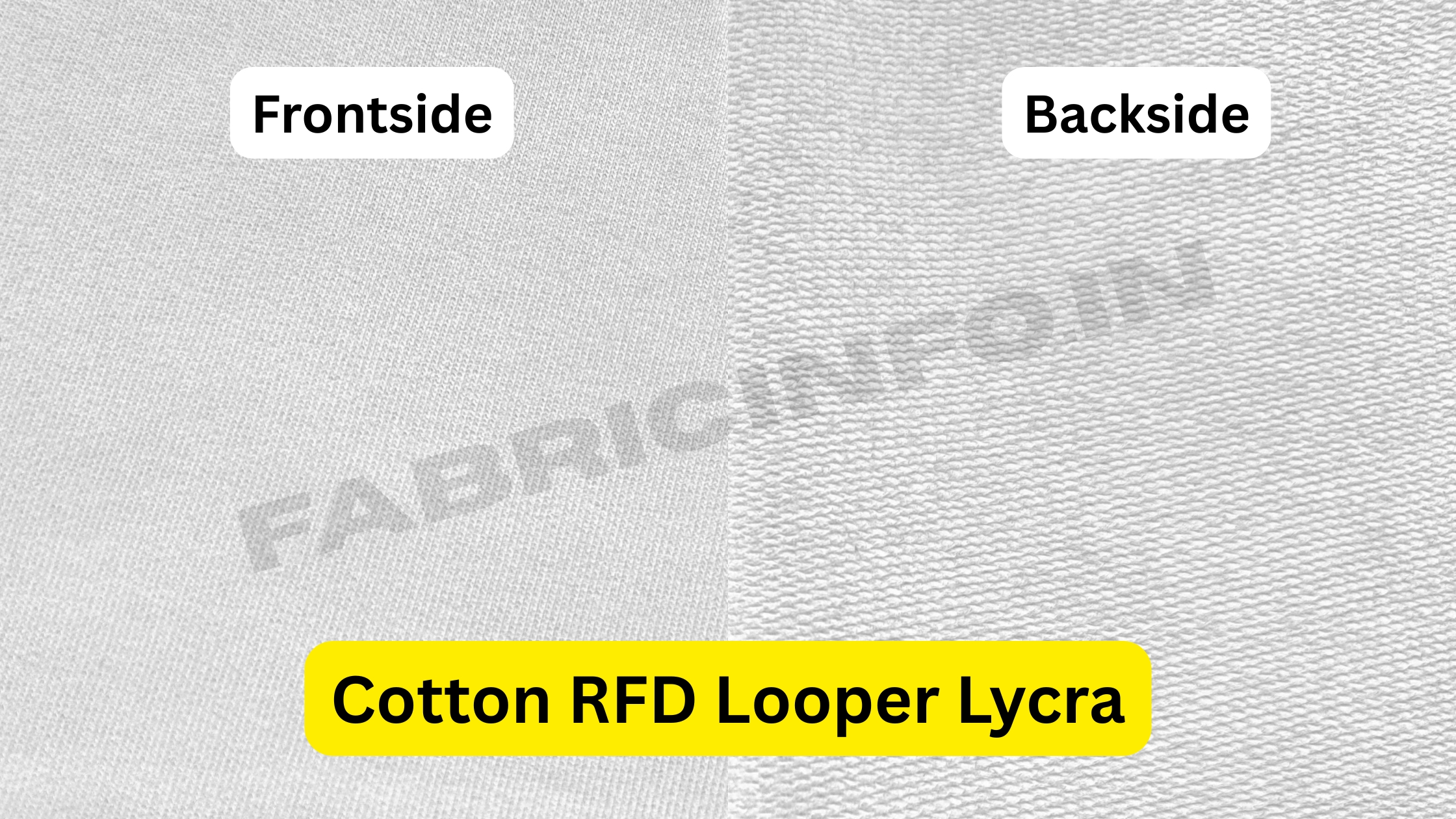
Welcome back to Fabricinfo.in, your go-to source for understanding the world of textiles! Today, we’re diving deep into a fabric that’s become a cornerstone of modern comfort and style: Cotton RFD Looper Lycra. If you’ve ever wondered what makes your favorite hoodie so cozy yet perfectly fitted, or your loungewear so comfortable and durable, chances are this versatile blend is behind it.
Let’s break down this intriguing fabric name to truly appreciate its unique characteristics.
Deconstructing the Name: What is Cotton RFD Looper Lycra?
- Cotton: At its core, this fabric harnesses the natural goodness of cotton. Cotton is celebrated globally for its exceptional softness, breathability, and hypoallergenic properties. It’s gentle on the skin, excellent at absorbing moisture, and offers a natural, comfortable feel that synthetic fibers often struggle to replicate.
- RFD (Ready For Dyeing): This is a crucial designation for manufacturers and designers. “Ready For Dyeing” means the fabric has undergone specific pre-treatment processes – typically scouring and bleaching – to remove natural impurities, waxes, and sizing agents. This prepares the fabric to uniformly absorb and retain dyes, ensuring vibrant, consistent colors without needing extensive in-house pre-processing. For brands, this translates to efficiency and predictable results.
- Looper (or Loopknit / French Terry): This refers to the knitting construction. Looper fabric, often synonymous with loopknit or French Terry, is a type of circular knit fabric. Its defining feature is the presence of unbrushed loops on the back side of the fabric. While the face looks smooth and flat, the reverse side has soft, absorbent loops. This unique structure provides:
- Comfort: The loops create a soft, plush feel against the skin.
- Absorption: Excellent moisture-wicking capabilities, making it ideal for activewear.
- Insulation: The loops trap air, providing warmth without excessive bulk, making it suitable for transitional weather.
- Structure: It offers a certain drape and body, distinguishing it from thinner jersey knits.
- Lycra (Elastane / Spandex): The magic ingredient for stretch! Lycra, also known by its generic names Elastane or Spandex, is a synthetic fiber renowned for its exceptional elasticity. Even a small percentage of Lycra (typically 3-10%) significantly enhances the fabric’s properties:
- Stretch & Recovery: Allows the fabric to stretch considerably and then snap back to its original shape, preventing bagging or sagging.
- Fit & Comfort: Provides a comfortable, non-restrictive fit that moves with the body.
- Shape Retention: Ensures garments maintain their silhouette even after repeated wear and washing.
Key Properties and Characteristics
When you combine these elements, you get a fabric with an impressive array of benefits:
- Superior Comfort & Softness: The cotton base coupled with the loopknit construction makes for an incredibly soft and cozy feel.
- Excellent Stretch & Recovery: Thanks to Lycra, garments made from this fabric offer unrestricted movement and maintain their shape over time.
- Breathable & Absorbent: The cotton content ensures good airflow, while the loops on the reverse enhance moisture absorption, keeping the wearer comfortable.
- Durable: The combination of natural and synthetic fibers contributes to the fabric’s resilience against wear and tear.
- Versatile: Its unique blend of properties makes it suitable for a wide range of applications.
- Ready for Customization: The RFD treatment means it’s a blank canvas, ready to be dyed in any color imaginable, making it a favorite for fashion brands.
Manufacturing Process (Briefly)
The creation of Cotton RFD Looper Lycra involves:
- Yarn Blending: Cotton and Lycra (often as a core-spun yarn for better integration) are prepared.
- Knitting: These yarns are fed into circular knitting machines to create the distinctive loopknit structure.
- RFD Treatment: The greige (raw) fabric undergoes a thorough cleaning, scouring, and bleaching process to make it RFD.
- Finishing: The fabric is then processed to achieve the desired hand-feel, width, and stability.
You can ask for exact yarn blending, manufacturing process, and finishing quality from your Cotton RFD Looper Lycra supplier for better understanding.
Common Uses and Applications
Given its comfort, stretch, and aesthetic appeal, Cotton RFD Looper Lycra is a staple in many wardrobes and product lines:
- Activewear & Sportswear: Joggers, sweatpants, hoodies, athletic shorts, and tracksuits benefit from its stretch, breathability, and comfort.
- Casual Wear: Oversized t-shirts, comfortable pullovers, loungewear sets, and casual dresses.
- Baby & Kids Clothing: Its softness, stretch, and ease of care make it ideal for delicate skin.
- Sleepwear & Home Apparel: Provides unparalleled comfort for relaxing at home.
Caring for Your Cotton RFD Looper Lycra Garments
To ensure the longevity of items made from this fantastic fabric:
- Washing: Machine wash in cold or warm water with similar colors.
- Detergent: Use a mild detergent.
- Bleach: Avoid chlorine bleach, as it can damage the Lycra fibers.
- Drying: Tumble dry on low heat or line dry to preserve elasticity and prevent shrinkage.
- Ironing: If needed, iron on a low-to-medium setting. Avoid direct heat on prints or embellishments.
Conclusion
Cotton RFD Looper Lycra is more than just a fabric; it’s a testament to how natural fibers and modern synthetics can combine to create something truly exceptional. Its blend of comfort, stretch, durability, and readiness for vibrant dyeing makes it an indispensable material for designers, manufacturers, and consumers alike. Whether you’re lounging at home, hitting the gym, or stepping out in casual style, chances are you’ll appreciate the seamless blend of function and fashion that Cotton RFD Looper Lycra offers.
Stay tuned to Fabricinfo.in for more fabric deep dives!